#WomensMarch in Washington, DC
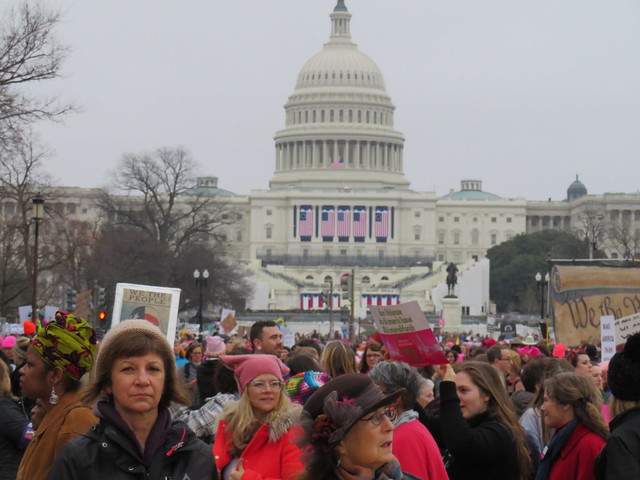 (Jan. 21, 2017) The Women’s March on Washington, DC, was remarkable on so many levels. To begin with, it started with an idea. No one owned the idea. It wasn’t trademarked, funded by a corporation or association, or even managed. It was an idea that traveled from Hawaii, on the ripple of a butterfly wing, to encircle the globe.
There was no fee to attend, no registration, no security, no bag checks or tickets. There was no speciality pricing on hotel rooms. People just showed up – by charter bus, on the metro, by foot and car. They stayed with friends, or friends of friends, or welcoming strangers. They were young and old, able-bodied and in wheelchairs, young families and older couples, a rainbow of ethnicities, languages and beliefs.
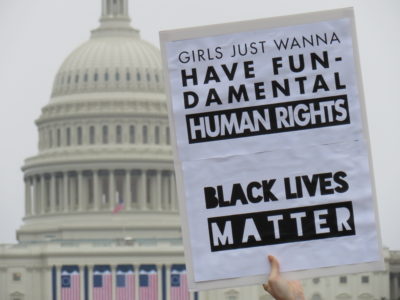
The signs were made of brown cardboard from packing boxes and poster board or whatever was at hand. Painted, colored with markers, taped onto sticks. They were clever, creative, blunt, profane, colorful, accusatory, uplifting . . . They were homemade. Home made. These thoughts, feelings and ideas belonged to the people who made them, brought them, carried them through the streets. The materials used to create these messages spoke so loudly to the grassroots energy of those who showed up: our family, friends, neighbors, co-workers.
The images on social media leading up to Saturday’s march showed planes and trains and buses full of women. In pink pussy hats, and t-shirts with their messages, and smiles on their faces. There was a sense of hope, optimism and energy that radiated from their faces. There was a sense of community that said we are stronger together.
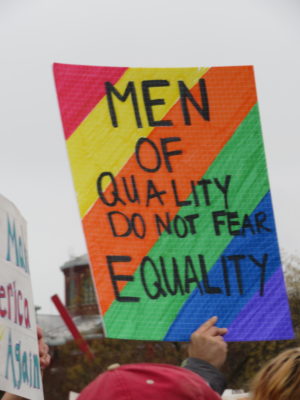 There were so many men who came, and marched and chanted – including my own husband. They were not there as the leaders of this movement, but as supporters, and followers and believers in a world where equality means equality for everyone.
The crowds exceeded expectations and spilled out all over the city. As the crowds spilled out of their boundaries in cities and small towns all over the world . . . on every single continent.
And nothing bad happened. No incidents, no injuries, no arrests. Despite the millions of people out in the street all over the world. There was no need for armed men in riot gear, the national guard or the army reserve.
There is a lesson in all of this. One that it will take some time to process. It will be written about in the decades ahead as something extraordinary that speaks to our common humanity in the fight for equality across the globe. It is a universal message about the rights of women to be seen as human beings with all the rights and privileges thereto.
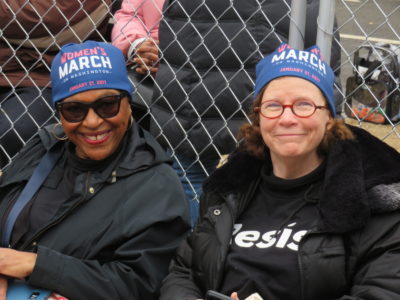 This is the story of resistance to a national narrative that wants to exclude us. And the story of people getting woke. Finally. To understanding that we must look out for everyone’s rights. This means being engaged, informed and willing to work at the democratic process.
Women have worked for centuries to get where we are. It’s not far enough. Not for our daughters, our granddaughters or the generations to come.